Join the waitlist

Early access

Every stroke on the SkiErg, straight off your wrist.

Your watch talks to the Concept2 PM5 directly and records the whole piece — stroke by stroke, no phone propped against the monitor. Then it reads that output against the skiing you are actually doing.

JONAS EK · 2000M · DRAG 6 SAMPLE DATA
Time 7:04.3
Avg /500m 1:46.1
Avg watts 428
Strokes / min 42
Consistency 82%

Power per stroke

TARGET 440W LOW HIGH
STROKE 190180270

Three drops below 380 W in the third 500. Jonas is losing the catch when rate climbs past 44 — worth a rate-capped repeat next session.

Splits

Dist Time Δ 500 1:43.2 -2.9 1000 1:46.8 +0.7 1500 1:48.4 +2.3 2000 1:45.9 -0.2
vs target pace 1:46.0
Sample session detail view: a 2000m threshold piece at drag factor 6. Average 428 watts, 42 strokes per minute, 82% stroke consistency. Power per stroke holds near the 440 watt target until the third 500 metres, where three strokes fall below 380 watts.

Why this exists

01

No phone at the erg

The watch talks to the PM5 directly over Bluetooth and records every stroke. Nothing to prop against the monitor, nothing to unlock between pieces, nothing to forget in the changing room.

02

Erg output against real ski volume

The same watch already records the skiing. Erg watts get read against the training load that surrounds them, not in a vacuum — which is the question a Nordic coach actually has.

The technical argument

A stroke is not a second

An ordinary activity file samples about once a second. That is enough for pace and heart rate, and it is structurally incapable of carrying a stroke: the drive is under a second long, and the force waveform inside it is dozens of samples deep.

So the choice is not a preference. Either the watch app reads the PM5 itself and keeps every stroke, or the per-stroke layer does not exist. Everything a coach wants to look at — where the catch went, how drive length held under fatigue, which 500 the piece actually fell apart in — lives in the part a 1 Hz file throws away.

The full path, from flywheel to dashboard →

Per stroke every drive, plus the force curve inside it
1 Hz activity file an average, sampled once a second
A comparison of sampling resolution: per-stroke capture records every drive and the force waveform within it, while a one-hertz activity file records a single averaged sample each second.

The coach's view

Built for the four minutes before practice

Scan the squad, find who has moved and who has stalled, and open the one session that needs a conversation. Colour only appears where there is a judgement to make.
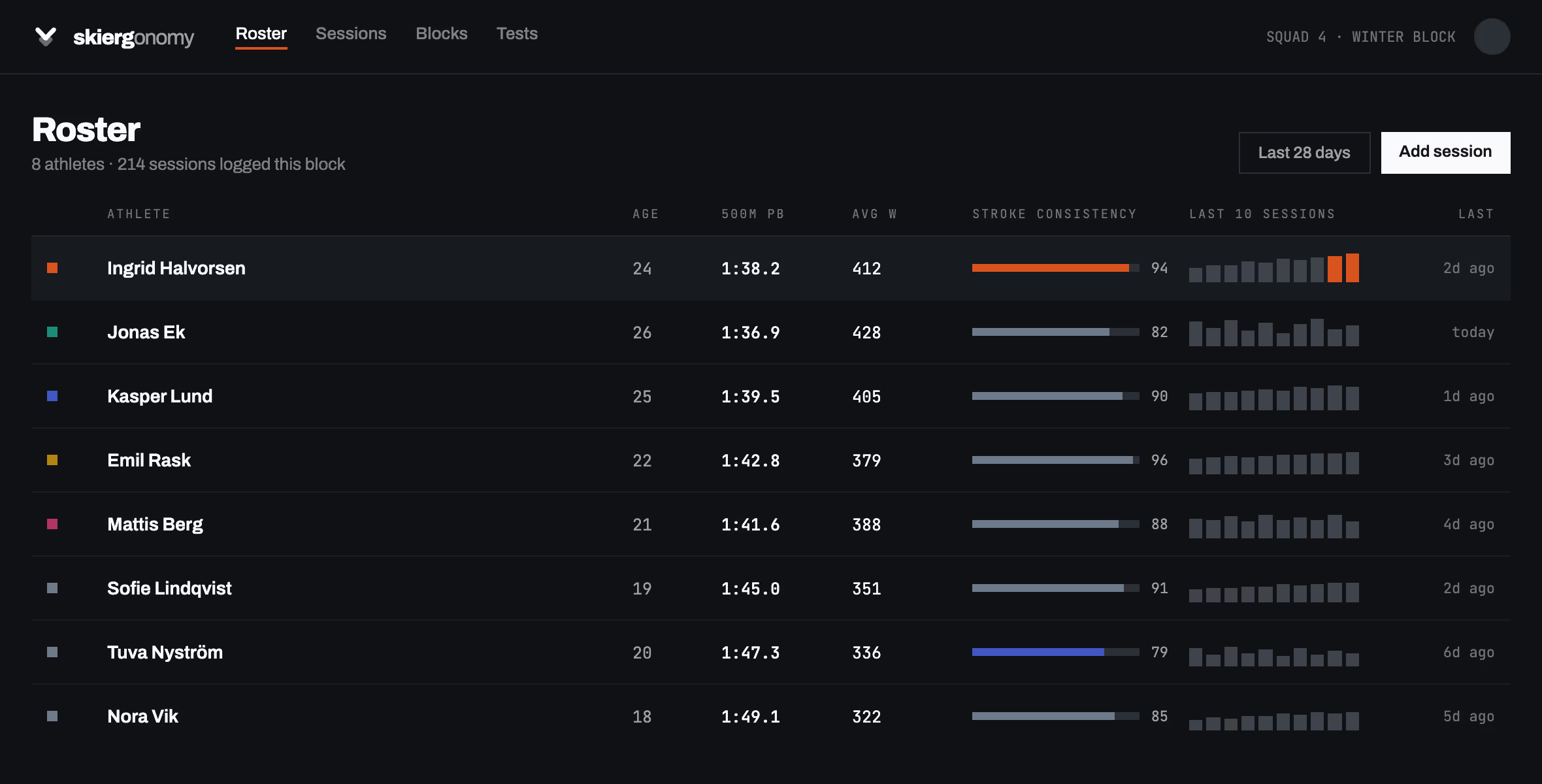
The skiergonomy roster screen: eight athletes listed with age, 500m personal best, average watts, a stroke consistency bar, a ten-session trend sparkline and days since their last session. SAMPLE DATA
Roster — the whole squad on one screen, sorted by whatever question you have today.
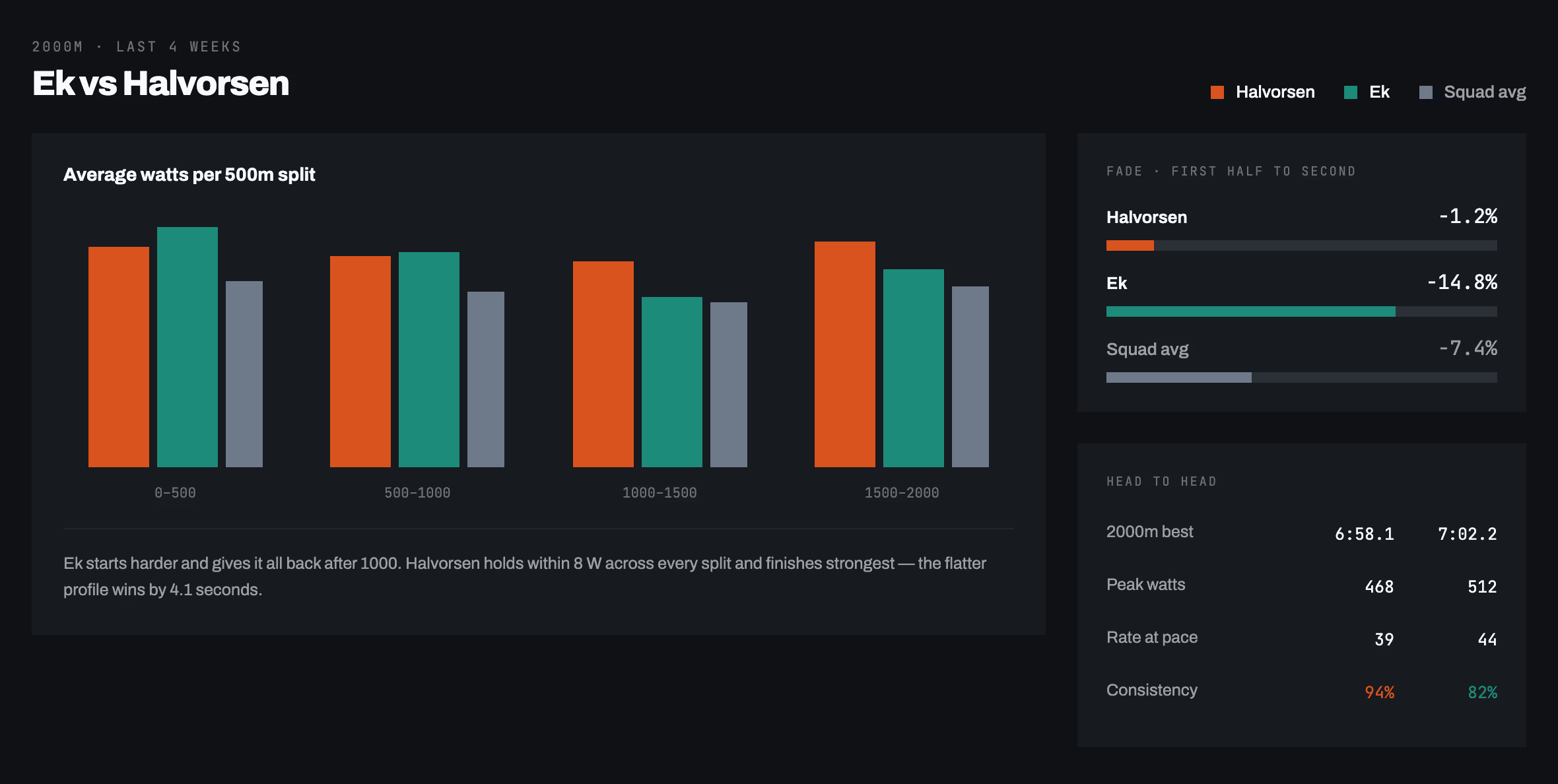
The skiergonomy compare screen: average watts per 500m split for two athletes and the squad average, with a fade panel showing first-half to second-half drop-off and a head to head table. SAMPLE DATA
Compare — two athletes on the same piece, with the fade from first half to second made explicit.

Questions we get asked

Do I need my phone next to the erg?
No. The watch connects to the PM5 itself over Bluetooth. That is the whole point — the other tools with stroke-level data need a phone app running beside the machine, which is one more thing to charge, unlock and forget.
What do I need to use it?
A Concept2 SkiErg with a PM5 monitor, and a watch that runs the app. Nothing else — no chest strap requirement, no phone, no cable, no dongle.
Is it for coaches or for individual skiers?
Both, and they are separate paths. An individual records and reviews their own sessions for free. A coach adds a squad on top of that: a roster, comparison between athletes, and test-over-test tracking across a block.
Is this built for the SkiErg specifically?
Entirely. Double poling is not rowing with different handles, and the things worth measuring are different: drive length under fatigue, how rate and power come apart late in a piece, how erg output tracks against on-snow volume. Everything here is shaped around that.
Does this replace the Concept2 Logbook?
No, and it is not trying to. The logbook is where your results live. This is where you read how a piece was produced — the shape of the effort, not just the time at the end of it.
What does it cost?
The watch app is free, and recording and reviewing your own sessions is free. Coaches pay per athlete seat for the team dashboard. The price is not set yet, and we would rather say that than publish a number we then move.
Where does my data live?
On our own servers in the EU, not a third party’s. Heart rate is special-category data under GDPR and it gets treated that way: export and delete on request, no ad tech, no resale.

Early access

Get on it early

Whether that is a squad of fifteen or just you and an erg in a cold garage. Tell us which and you go near the front of the queue.

One email when it opens up. Nothing else, no list swapping, unsubscribe in a click. How we handle it.